Other Transaction Authority projects are built for speed. That speed is what makes OTAs attractive, but it is also what increases risk when export controls and supply chain security are not addressed early. OTAs often bring together new partners, evolving scopes, and rapid collaboration. Without clear guardrails, teams can expose sensitive data or introduce hidden supply chain vulnerabilities without realizing it.
Sponsors understand that OTAs are meant to accelerate innovation, but they still expect contractors to protect national security interests. Managing export controls and supply chain risk is not about slowing progress. It is about creating enough structure to move forward confidently.
Export Controls Require Early Clarity
One of the most common challenges in OTA projects is identifying which data is actually subject to export controls. During early prototyping, information flows quickly between engineers, vendors, and government stakeholders. Some of that information may fall under ITAR, EAR, or other export control regimes depending on the technology and its intended use.
Teams that wait to classify data often find themselves reacting to problems instead of preventing them. Effective OTA teams treat data classification as part of project setup. They determine what data is controlled, where it will live, and who should have access before collaboration begins. This clarity prevents accidental exposure and avoids last-minute access restrictions that disrupt work.
Access control makes export compliance practical. Vendors and subcontractors usually need limited access, not full visibility. Sponsors expect role-based access and verification of citizenship or residency requirements where applicable. Clear access boundaries allow teams to collaborate efficiently while protecting sensitive information.
Supply Chain Risk Grows as Teams Scale
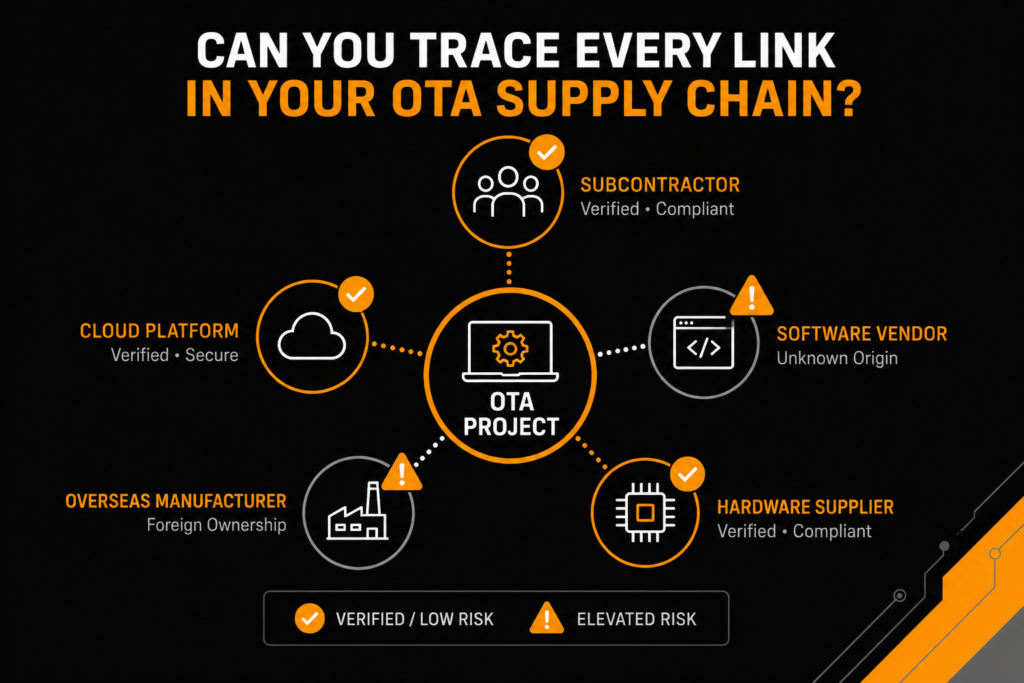
Supply chain risk becomes more complex as OTA teams expand. Because OTAs prioritize speed, vendors are often selected quickly based on capability or availability. Sponsors increasingly expect contractors to look beyond performance alone and understand where components are manufactured, where software originates, and whether vendors are subject to foreign ownership or control.
Hidden supply chain exposure can create serious problems after work has already begun. Teams that evaluate supply chain risk early avoid disruptions and maintain credibility with sponsors. This includes understanding dependencies, documenting vendor origins, and being prepared to explain how risks are mitigated.
Export controls and supply chain security cannot exist only in policy documents. They must be embedded into daily operations. Secure collaboration tools, approved data sharing methods, regular training, and consistent documentation allow teams to move faster because decisions do not require constant escalation.
Clear documentation also plays a critical role. When sponsors ask how risks were addressed, teams with concise records can respond quickly and confidently. That transparency builds trust and keeps projects moving forward.
The bottom line is that OTAs reward speed, but they do not excuse risk. Export controls and supply chain security protect the mission and the partnership. Teams that address these issues early are better positioned to deliver results without interruption.
Next Step
If you are participating in an OTA project and want to assess your readiness, download Black Rock’s Tech Modernization Checklist. It will help you identify export control exposure, supply chain risk, and security gaps before they slow delivery.