
Digital and technological modernization often feels like a tug-of-war. Innovation teams push for speed, flexibility, and new capabilities. Security teams push for control, visibility, and risk reduction. When these forces are misaligned, modernization slows down or fails altogether.
Balancing security with innovation is not about compromise. It is about alignment. Organizations that modernize successfully design security to enable innovation rather than restrict it.
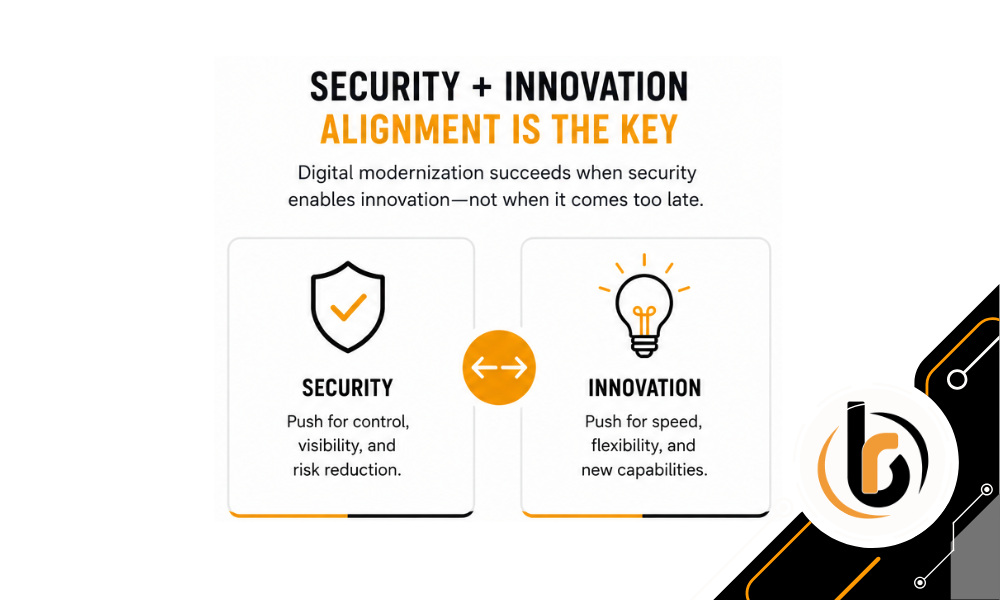
Security Becomes a Bottleneck When It Arrives Too Late
Security problems during modernization rarely come from too much security. They come from security being introduced after decisions are already made. When platforms, architectures, or vendors are selected without security input, teams are forced to retrofit controls later. That rework slows progress and creates frustration on both sides.
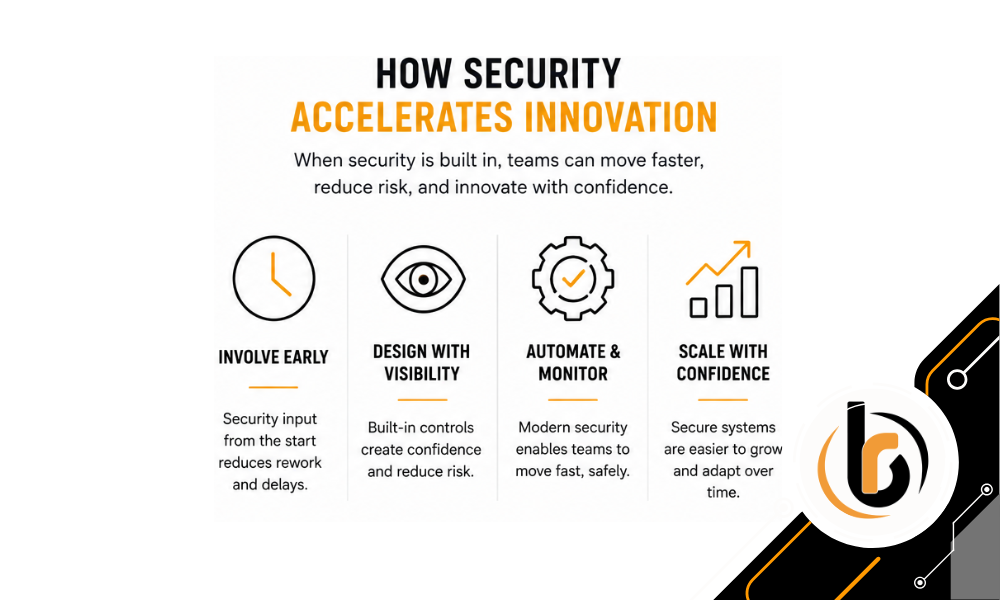
Modernization moves faster when security leaders are involved early. Identity models, data flows, access controls, and monitoring can be built into the design instead of layered on afterward. When security is part of the foundation, innovation does not need to stop to wait for approvals.
Early alignment also reduces uncertainty. Teams know what is acceptable, what evidence is required, and how decisions will be evaluated. That clarity removes hesitation and speeds delivery.
Innovation Accelerates When Security Creates Confidence
Well-designed security does more than reduce risk. It creates confidence. When teams have visibility into system behavior, access patterns, and configuration changes, they can move forward without guessing.
Modern security capabilities, such as identity-based access controls, automation, and continuous monitoring, enable innovation safely. Engineers can test new ideas, migrate workloads, and introduce new tools knowing that issues will be detected early.
Security also supports scalability. Systems designed with compliance and governance in mind are easier to transition into production, expand across teams, and adapt to future requirements. Innovation becomes repeatable instead of fragile.
The most effective organizations stop treating security as a gate and start treating it as infrastructure. When security works quietly in the background, innovation can keep moving.
The bottom line is that security and innovation are not opposites. When security is intentional and embedded in modernization efforts, it becomes the reason innovation can move faster rather than the reason it slows down.
Next Step
If your organization is modernizing technology and struggling to balance speed with security, download Black Rock’s Tech Modernization Checklist. It will help you align innovation goals with the controls needed to move forward confidently.