
One of the biggest reasons organizations pursue Other Transaction Authority (OTA) agreements is speed. OTAs allow teams to move faster than traditional Federal Acquisition Regulation contracts by reducing administrative friction and enabling rapid prototyping.
But speed can disappear quickly if budgeting and pricing are handled poorly. Many contractors either underprice work to win the award or overcomplicate their cost structures, slowing negotiations. To stay competitive, you need a pricing approach that is clear, flexible, and defensible.
Why Budgeting Under an OTA Is Different
OTA agreements are not governed by the rigid pricing rules found in FAR contracts. That gives both the government and contractors more flexibility, but it also means there is less standardization.
Sponsors are not looking for the lowest price. They are looking for a reasonable cost tied to clearly defined outcomes. If your pricing model is confusing or disconnected from deliverables, evaluators may question your ability to execute efficiently.
Start with Outcome-Based Pricing
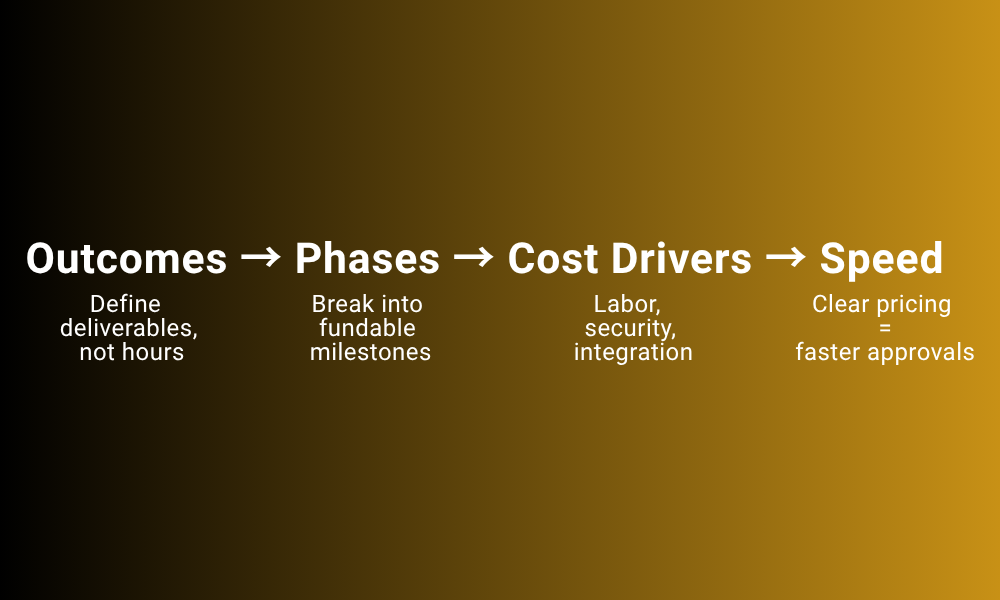
The most effective OTA budgets are built around outcomes, not line items. Instead of leading with labor hours or internal cost categories, competitive proposals define what each phase will deliver and then align costs to those results.
For example, a prototype phase might include system design, development, testing, and demonstration. Each of those milestones should have a clear objective and a corresponding cost. This makes it easier for sponsors to evaluate value and approve funding quickly.
Use Phased Budgets to Preserve Momentum
Phased budgeting is one of the best ways to maintain speed under an OTA. Rather than locking in a large, complex budget upfront, successful contractors propose smaller, well-defined phases.
Each phase builds confidence by delivering measurable progress. This approach reduces risk for sponsors and shortens approval cycles. It also gives both parties the flexibility to adjust scope or funding as the project evolves.
Be Transparent About Cost Drivers
Sponsors understand that innovation carries uncertainty. What they want is transparency. Competitive OTA proposals explain what drives cost and where variability may occur.
Common cost drivers include specialized labor, secure infrastructure, compliance requirements, and integration complexity. When you explain these factors clearly, you reduce friction during negotiations and avoid delays caused by repeated clarification requests.
Avoid Over-Engineering Your Pricing Model
One of the most common mistakes contractors make is bringing FAR-style pricing complexity into an OTA. Highly detailed indirect rates, layered cost pools, and excessive documentation can slow reviews and undermine the very speed OTAs are meant to provide.
Instead, focus on clarity. Use simple cost categories and explain them in plain language. The easier it is for a sponsor to understand your budget, the faster they can move forward.
Account for Security and Compliance Early
Cybersecurity and compliance costs are often underestimated in OTA projects. Even though OTAs are flexible, sponsors still expect protection of Controlled Unclassified Information and alignment with standards such as NIST SP 800-171.
If you do not account for these requirements early, you may face scope creep or delays later. Including security and compliance in your baseline budget shows maturity and helps prevent surprises.
Price for Sustainability, Not Just an Award
Underpricing may help win an OTA, but it can quickly create execution problems. Teams stretched too thin often miss deadlines or compromise quality, which damages trust with sponsors.
A competitive OTA proposal balances affordability with realism. Evaluators prefer a proposal that is priced correctly and delivered successfully over one that promises more than it can sustain.
Show How Budget Supports Speed
Speed is not just about timelines. It is about decision-making. When your pricing structure is clear, sponsors can approve changes faster, fund additional phases more easily, and move from prototype to production with less friction.
A strong budget tells the evaluator that your team understands how to move quickly without losing control.
The Bottom Line
Budgeting and pricing under an OTA should accelerate progress, not slow it down. By focusing on outcomes, using phased budgets, maintaining transparency, and accounting for security early, you can preserve the speed that makes OTAs so valuable.
The goal is not to be the cheapest option. It is to be the most credible and efficient partner for innovation.
Next Step
If you are preparing for an OTA opportunity, download Black Rock’s Tech Modernization Checklist. It will help you assess your systems, compliance readiness, and cost structure before you submit your proposal.