
Digital modernization is often delayed not because leaders do not see the need, but because of persistent myths about cost, risk, and disruption. These assumptions become barriers that keep organizations locked into legacy systems long after they have stopped serving the mission.
Modernization does not fail because technology is too advanced. It fails because decision-making is driven by fear instead of clarity. Busting the most common myths helps teams move forward with confidence and realism.
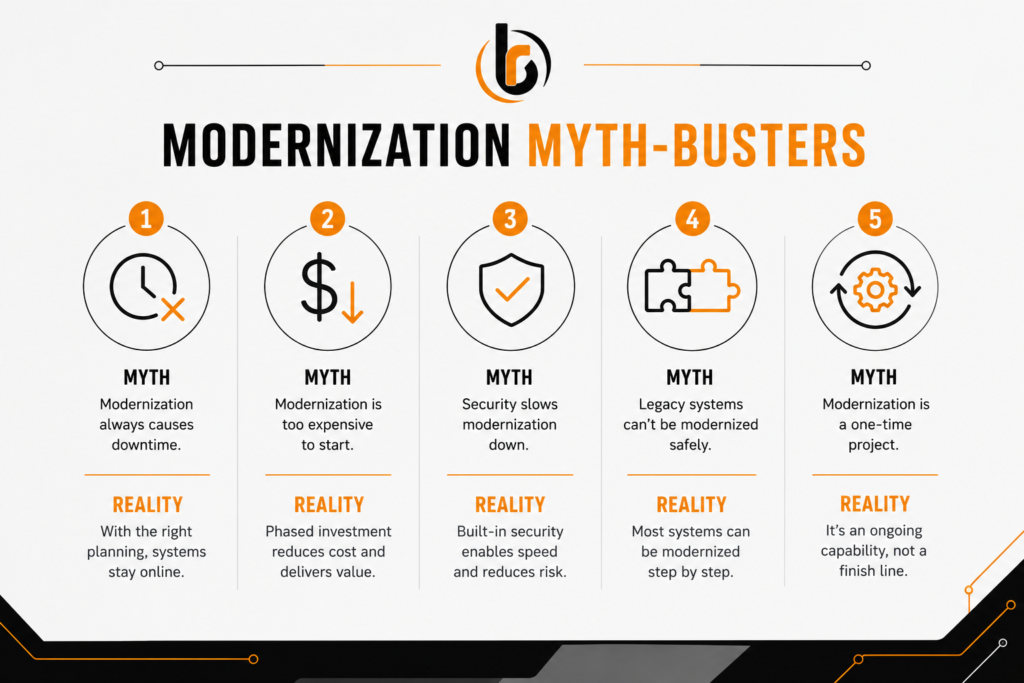
Myth One: Modernization Always Causes Downtime
One of the most common beliefs is that modernizing technology automatically means taking systems offline. In reality, downtime is usually the result of poor planning, not modernization itself.
Modern digital modernization relies on staged migrations, parallel environments, and controlled cutovers. Cloud platforms, virtualization, and modern identity systems allow teams to upgrade components incrementally while keeping core services online. Organizations that experience major outages during modernization typically skipped visibility and testing, not security or tooling.
When modernization is designed as a transition rather than a replacement, uptime becomes a requirement rather than a gamble.
Myth Two: Modernization Is Too Expensive to Start
Another myth is that modernization requires a massive upfront investment. This belief keeps many organizations frozen in place, even as maintenance costs and risk continue to grow.
Modernization does not need to happen all at once. Phased approaches allow teams to prioritize high-risk or high-impact systems first and spread the cost over time. In many cases, the cost of maintaining legacy systems quietly exceeds the cost of incremental modernization.
A clear roadmap ties investment to outcomes. Spending becomes intentional rather than reactive, thereby reducing long-term financial exposure.
Myth Three: Security Slows Modernization Down
Security is often seen as the reason modernization projects move slowly. In reality, security enables speed when it is designed correctly.
Modern identity systems, automation, logging, and monitoring give teams visibility and control. That visibility reduces hesitation and rework. When security is embedded into the architecture rather than bolted on later, teams move faster because fewer decisions need to be escalated.
Security becomes a stabilizer, not a blocker.
Myth Four: Legacy Systems Cannot Be Modernized Safely
Many organizations assume that legacy systems are too fragile to change. This myth keeps outdated platforms running far longer than they should.
While some systems require careful handling, most can be modernized safely through isolation, wrapping, or gradual replacement. APIs, integration layers, and virtualization allow legacy components to coexist with modern platforms during transition.
The real risk is leaving systems untouched until failure forces rushed change.
Myth Five: Modernization Is a One-Time Project
The most damaging myth is that modernization has a finish line. Technology does not stand still, and neither should modernization efforts.
Successful organizations treat modernization as an ongoing capability. Roadmaps are revisited, priorities shift, and systems evolve continuously. This approach prevents large, disruptive overhauls and keeps technology aligned with mission needs.
The bottom line is that modernization is not as risky or disruptive as many believe. The real risk is letting myths drive decisions instead of facts.
Next Step
If your organization is planning digital or technological modernization and wants to separate myth from reality, download Black Rock’s Tech Modernization Checklist. It will help you assess readiness, priorities, and risk before assumptions slow progress.