
Technology modernization rarely fails because the tools are not capable. It fails because momentum breaks down. Teams start with energy and urgency, but progress slows as decisions pile up, dependencies surface, and priorities compete. Over time, modernization becomes something that is always in progress but never finished.
Understanding where modernization typically gets stuck is the first step toward avoiding unnecessary delays. Most bottlenecks are predictable and preventable when addressed early.
Bottlenecks Usually Start with Visibility and Alignment
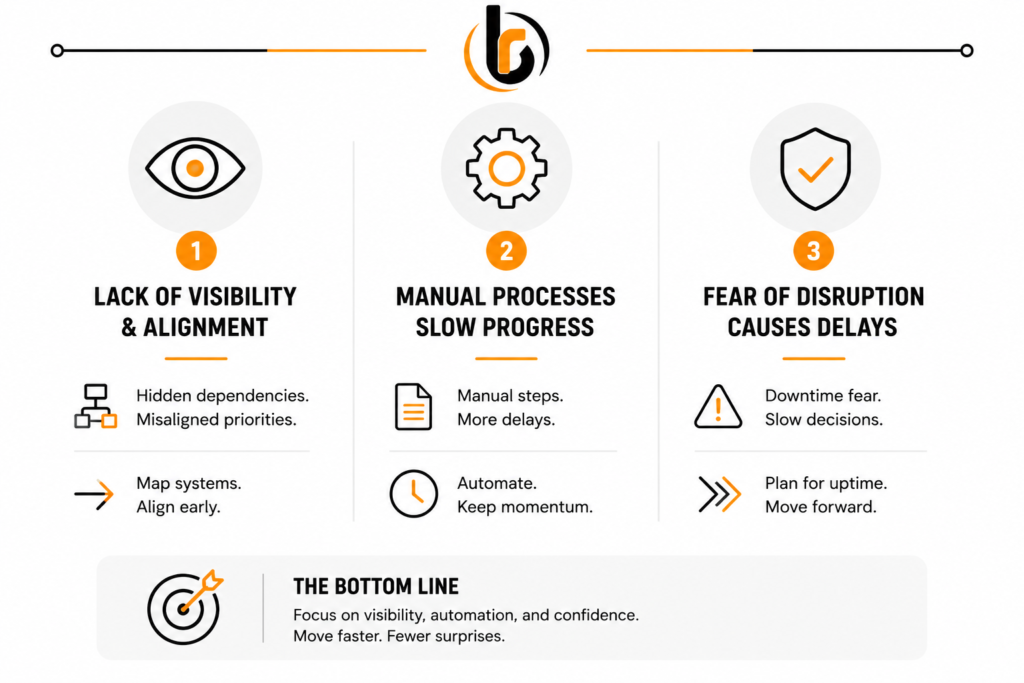
One of the most common bottlenecks in modernization is a lack of visibility. Teams begin upgrading systems without a shared understanding of how applications, data, and integrations actually work together. Hidden dependencies surface late, forcing redesigns and pauses that could have been avoided.
Alignment issues compound the problem. Security, IT, engineering, and leadership often move at different speeds with different assumptions. When priorities are not aligned early on, decisions stall as teams debate risk, scope, or ownership.
Organizations that avoid this bottleneck invest time upfront in mapping systems and aligning stakeholders. Clear visibility and shared goals reduce hesitation and allow decisions to move forward confidently.
Manual Processes Slow Everything Down
Another major bottleneck is reliance on manual processes. Legacy change management, compliance reporting, and access approvals introduce friction that modern systems cannot overcome on their own.
When teams must stop progress to gather documentation, request approvals, or reconcile outdated records, modernization loses momentum. These pauses feel small individually, but they add up quickly.
Automation removes much of this friction. Identity-based access, continuous monitoring, and automated compliance evidence allow teams to move faster without sacrificing control. Modernization accelerates when routine work no longer depends on manual effort.
Fear of Disruption Creates Artificial Delays
Downtime anxiety is another common bottleneck. Leaders hesitate to approve changes because systems support live missions and operations. That hesitation leads to extended planning cycles and delayed execution.
Teams that modernize successfully address this fear directly. They design staged migrations, parallel environments, and rollback plans that protect uptime. When continuity is built into the plan, decisions move faster.
The real risk is not modernization itself. It is waiting until failure forces a rushed change.
The bottom line is that modernization bottlenecks are rarely technical. They are organizational and procedural. Teams that focus on visibility, automation, and confidence move through modernization faster and with fewer surprises.
Next Step
If your organization is encountering delays in digital or technological modernization, download Black Rock’s Tech Modernization Checklist. It will help you identify bottlenecks early and build a path forward that preserves momentum.