Legacy systems are often tolerated because they still function. They run core processes, support familiar workflows, and feel stable on the surface. Over time, however, those same systems quietly become one of the largest sources of compliance risk inside an organization.
Compliance risk tied to legacy technology rarely shows up all at once. It accumulates slowly as systems age, integrations sprawl, and documentation drifts away from reality. By the time risk becomes visible, organizations are often reacting under pressure instead of managing it proactively.
Why Legacy Systems Increase Compliance Exposure
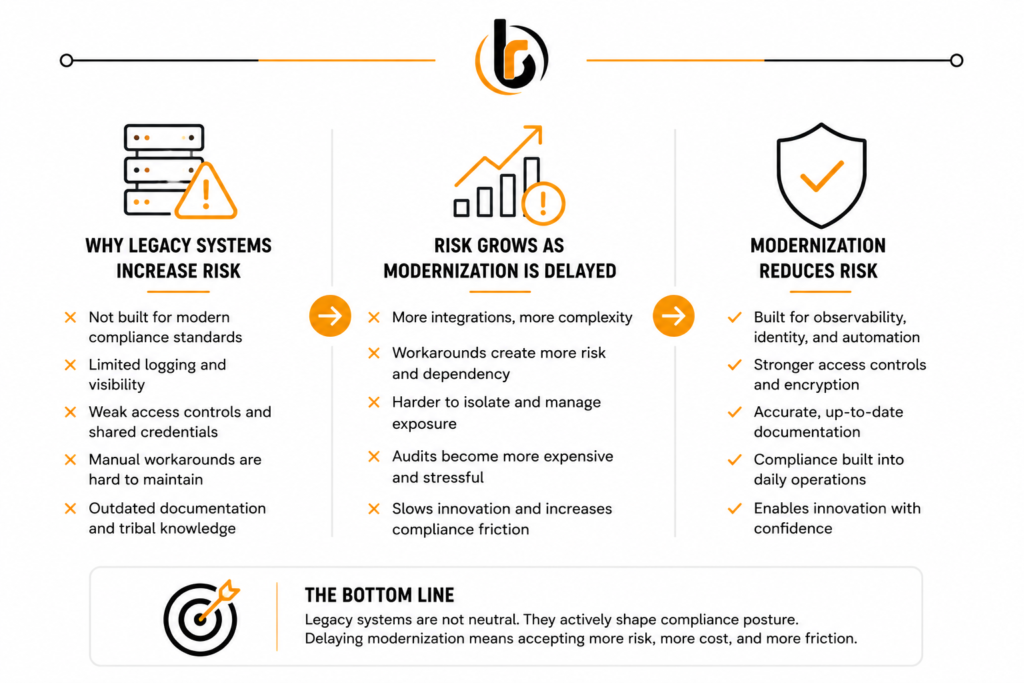
Legacy systems were rarely designed with modern compliance expectations in mind: many predate current security frameworks, identity standards, and monitoring requirements. As regulations evolve, these systems struggle to keep up without extensive customization or manual workarounds.
Common issues include limited logging, weak access controls, outdated encryption, and reliance on shared credentials. Even when compensating controls are in place, they are often manual and difficult to maintain. Over time, this creates gaps between what policies require and what systems can realistically support.
Documentation is another challenge. Legacy environments often rely on tribal knowledge rather than current records. When audits or sponsor reviews occur, teams scramble to explain how controls are applied in systems that were never designed to produce modern evidence.
Compliance Risk Grows as Modernization Is Delayed
The longer legacy systems remain in place, the harder it becomes to manage compliance risk. Each new integration adds complexity. Each workaround increases dependency on individual knowledge. Each audit becomes more expensive and stressful.
As teams modernize around legacy cores, risk becomes harder to isolate. Modern tools are forced to integrate with outdated platforms, thereby extending exposure rather than reducing it. What began as a stable system slowly turns into a single point of failure for compliance.
Modernization does not eliminate compliance obligations. It makes them achievable. When systems are upgraded or replaced with platforms designed for observability, identity management, and automation, compliance becomes part of daily operations instead of a periodic scramble.
The most significant risk is not that legacy systems fail tomorrow. It is that they quietly prevent organizations from meeting today’s compliance expectations without excessive effort and cost.
The bottom line is that legacy systems are not neutral. They actively shape compliance posture. Organizations that delay modernization often accept growing risk without realizing it.
Next Step
If your organization relies on legacy systems and wants to understand the compliance risk they introduce, download Black Rock’s Tech Modernization Checklist. It will help you identify exposure, prioritize modernization efforts, and reduce compliance friction.