
Digital and technological modernization is no longer optional for defense and regulated organizations. Legacy infrastructure, outdated software, and manual processes slow delivery and increase risk. Yet many teams delay modernization because they fear downtime. Systems support live missions, sensitive data, and contractual obligations. Taking them offline feels like a gamble they cannot afford.
Modernization without downtime is not about avoiding change. It is about designing digital and technological upgrades that preserve continuity as systems evolve. Organizations that succeed treat modernization as a controlled transition, not a disruptive event.
Downtime Is a Digital Planning Problem
Most downtime during digital modernization is not caused by failed technology. It is caused by an incomplete understanding of how systems are connected. Legacy applications often depend on undocumented integrations, shared credentials, and brittle workflows that only surface when changes are made.
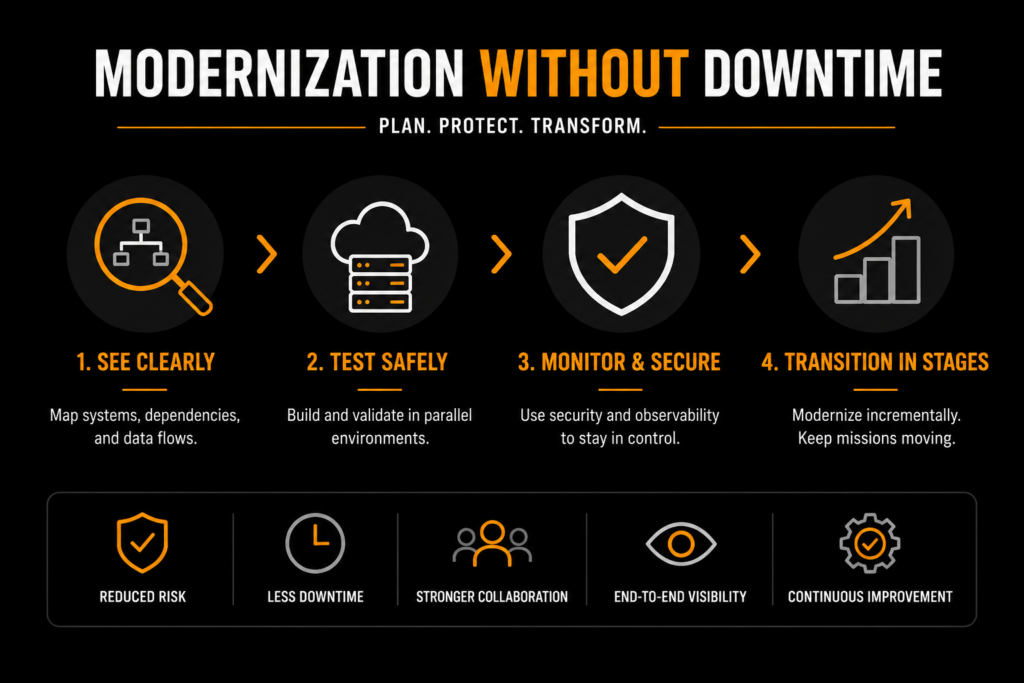
Teams that modernize safely begin with visibility. They map applications, data flows, authentication paths, and dependencies before touching production systems. This allows them to identify which digital components are mission-critical, which can be migrated independently, and which require staged replacement.
Parallel environments are essential. Instead of upgrading systems directly in production, successful teams build test and staging environments that mirror real usage. New platforms, cloud services, identity systems, and automation tools are validated before cutover. This reduces risk and allows teams to modernize incrementally.
Security and Observability Keep Systems Online
Security is not separate from uptime. In digital modernization, security controls enable safer transitions. Identity-based access, environment segmentation, logging, and monitoring give teams visibility into what is changing and how systems are behaving.
When modernization includes continuous monitoring and configuration management, teams can detect issues early and respond quickly. Clear rollback procedures allow systems to revert safely if something does not behave as expected. Downtime becomes manageable instead of catastrophic.
Digital modernization also depends on coordination across vendors and platforms. Cloud providers, software vendors, and integration partners must be aligned with the modernization plan. Clear communication, shared testing schedules, and defined responsibilities reduce the risk of unexpected outages.
The most effective modernization efforts treat uptime as a design requirement. Digital systems are upgraded in stages, with visibility and control at every step.
The bottom line is that digital and technological modernization need not disrupt operations. With the right planning, security, and observability, organizations can modernize systems while remaining operational and mission-ready.
Next Step
If your organization is planning digital or technological modernization and wants to reduce downtime risk, download Black Rock’s Tech Modernization Checklist. It will help you assess system dependencies, digital readiness, and transition planning before changes are made.