
Most organizations know their technology needs to modernize. Legacy systems slow teams down, increase risk, and make compliance harder over time. The problem is not awareness. The problem is fear. Leaders worry that modernization will spiral into a multi-year project that costs more than expected and delivers less than promised.
A strong tech modernization roadmap exists to solve that problem. It creates clarity around what needs to change, when it should change, and how investment ties directly to business and mission outcomes. When done well, a roadmap protects the budget as much as it accelerates progress.
A Roadmap Creates Focus Before Spending Begins
The fastest way to overspend on modernization is to start buying tools before understanding the environment. Many budgets are blown because teams modernize everything at once or chase the newest platform without a clear priority.
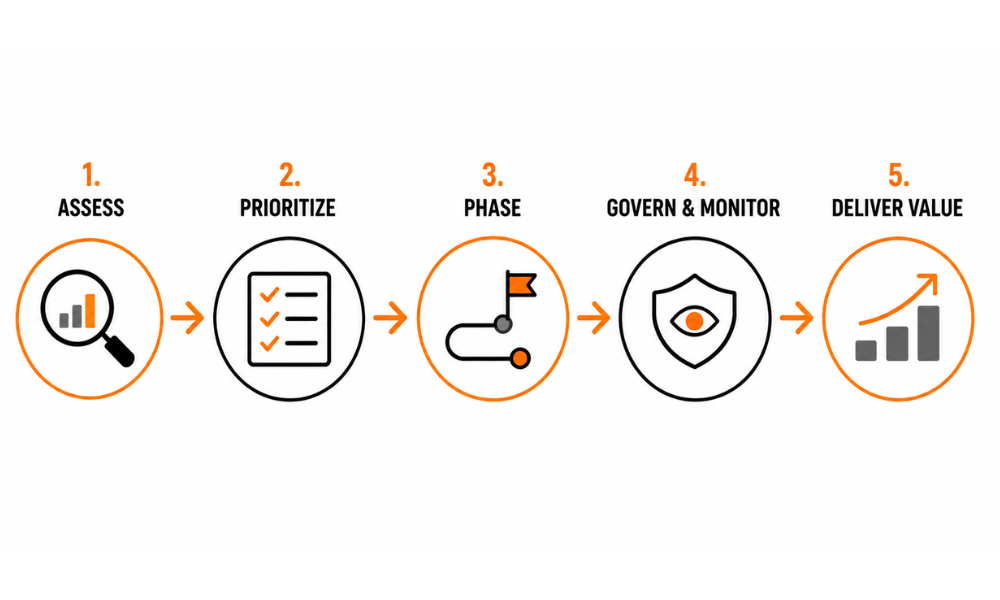
An effective roadmap starts with visibility. Teams assess current systems, data flows, integrations, and operational dependencies. This allows leaders to see which technologies are truly holding the organization back and which are simply inconvenient. Modernization then becomes a sequence of decisions rather than a single expensive leap.
By prioritizing systems based on risk, impact, and readiness, organizations can invest in modernization where it delivers the most value first. This reduces waste and spreads cost over time instead of concentrating it up front.
Phasing Protects Both Budget and Momentum
Modernization rarely fails because of technology. It fails because it tries to do too much too quickly. A roadmap that breaks modernization into phases protects both delivery timelines and budgets.
Phased roadmaps align spending with outcomes. Each phase has a defined goal, whether that is migrating a workload, replacing a legacy application, or introducing automation. Costs are tied to results, not assumptions. This makes it easier to course correct before budgets are exceeded.
Phasing also allows teams to validate decisions before scaling. Early lessons learned can shape later investments, reducing the likelihood of costly rework.
Governance and Visibility Prevent Cost Creep
Budgets are often blown when modernization efforts lack governance. Without clear ownership, scope expands quietly, and costs follow. A roadmap establishes guardrails by defining what success looks like for each phase and who is accountable for it.
Visibility is just as important. Ongoing monitoring of spend, progress, and system performance allows leaders to identify issues early. When teams understand how changes affect costs and operations in real time, decisions become data-driven rather than reactive.
Strong governance does not slow modernization. It prevents surprises that cause delays and budget overruns later.
The bottom line is that a tech modernization roadmap is not a planning exercise for its own sake. It is a financial control mechanism. Organizations that invest time in building a roadmap move faster, spend smarter, and avoid the painful cycle of rushed fixes and unplanned costs.
Next Step
If your organization is planning digital or technological modernization, download Black Rock’s Tech Modernization Checklist. It will help you assess systems, prioritize initiatives, and build a roadmap that supports progress without blowing your budget.