
Digital transformation puts CISOs in a difficult position. They are expected to modernize systems, reduce risk, and support innovation, all while operating within budgets that are often fixed or shrinking. Unlike other technology investments, security-driven transformation does not always have an immediate revenue impact, making budgeting decisions harder to justify.
Effective budgeting for digital transformation is not about finding more money. It is about structuring investment to align security priorities with business and mission outcomes. CISOs who approach budgeting strategically gain more influence and deliver better results.
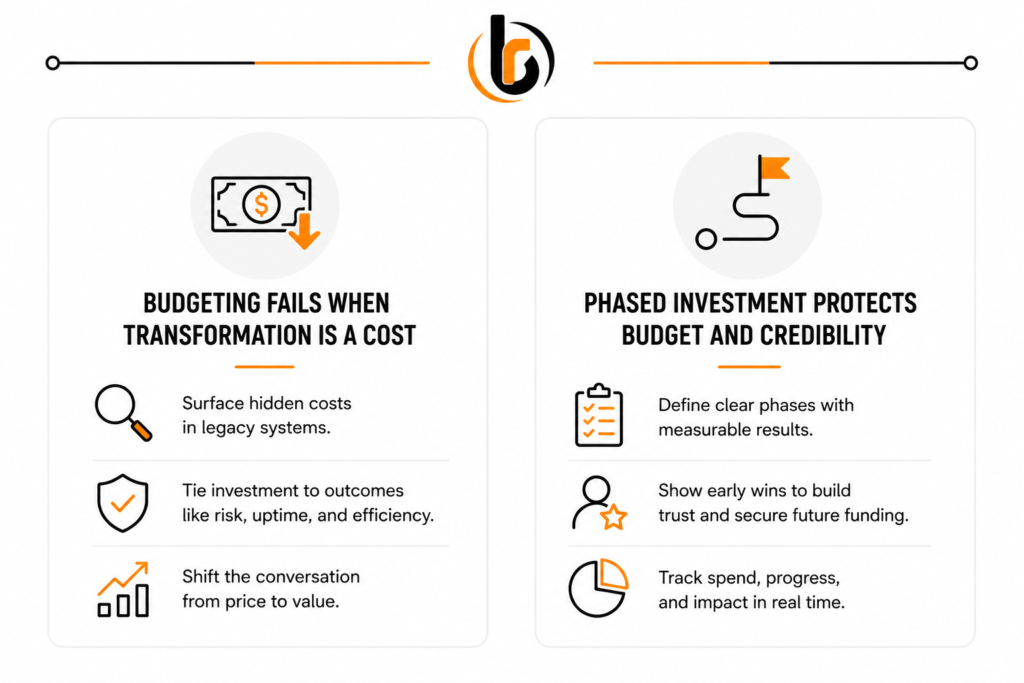
Budgeting Fails When Transformation Is Framed as a Cost
One of the most common mistakes in digital transformation budgeting is treating modernization as a one-time expense. When transformation is framed solely as a cost, it competes poorly with visible operational needs.
Legacy systems often hide their true cost. Manual processes, brittle integrations, and compliance workarounds quietly consume staff time and increase risk. CISOs who surface these hidden costs create a stronger investment case. Modernization becomes a way to reduce operational drag rather than add spending.
Successful CISOs also tie budgets to outcomes. Instead of asking for funding to replace systems, they frame the investment in terms of risk reduction, audit efficiency, uptime, and scalability. This shifts conversations from price to value.
Phased Investment Protects Budget and Credibility
Digital transformation budgets fail when they are too large and too vague. Phased investment creates discipline and credibility. Each phase has a clear objective, defined scope, and measurable results.
This approach allows CISOs to demonstrate progress early. Wins build trust with leadership and make future funding easier to secure. Phasing also reduces risk by allowing teams to adjust based on lessons learned rather than committing everything up front.
Visibility is critical here. Tracking spend, progress, and impact in real time allows CISOs to make informed adjustments. Budgets become living tools instead of static constraints.
The bottom line is that digital transformation budgeting works best when it is intentional, phased, and outcome-driven. CISOs who align investment with risk reduction and operational efficiency lead transformation rather than react to it.
Next Step
If you are planning digital transformation and want to align security priorities with budget reality, download Black Rock’s Tech Modernization Checklist. It will help you identify high-impact investments and build a roadmap that leadership can support.